
Tuesday, October 2, 2012
R.E.M.- Collapse Into Now
My, it's been a while.
R.E.M. is one of my favorite bands of all time, and seeing as they broke up a year ago last week, I thought it fitting to post a review I wrote of their last album together, 2011's "Collapse Into Now".
Purchased at CD Alley In Chapel Hill (Preorder) March 2011.
Anyone who knows popular music's history cannot deny the importance of the work of Bill Berry, Peter Buck, Mike Mills, and Michael Stipe, better known collectively as R.E.M., whose remarkable 30-year career took them from humble beginnings, playing abandoned churches as students of the University of Georgia in Athens and eventually going on to signing historic 6-figure record deals with Warner Brothers and selling out stadiums worldwide. And with the band's breakup just over a year ago on September 21st, 2011, R.E.M. will forever be remembered as the perfect example of a band enjoying wild success without sacrificing originality or authenticity. It is for this reason that they are viewed by many as the godfathers of independent rock- and possibly the one band new acts want to most emulate.
The breakup was a surprise to most fans- especially as their fifteenth album, "Collapse Into Now", was released in March without fanfare of it being the last R.E.M. album ever. As such, it is a very interesting album because it becomes the band's swansong in retrospect, though the band had stated in future interviews that this was always the case. For starters, "Collapse Into Now" is unique in that it is the only album R.E.M. didn't tour or perform live to promote sales - an anomaly, considering R.E.M. started out by touring from Georgia to North Carolina every weekend as students in Athens. It is also one of their most introspective records, eschewing the Southern Gothic storytelling of their first 5 records and the themes of disillusionment of stardom, faith, critics, and music that were evident in the next ten. Despite all this, and the departure of drummer Bill Berry in 1996 after album #10, (Adventures in Hi-Fi), "Collapse Into Now" acts as a fitting bookend to close out the career of this most influential band. That being said, it has its flaws; namely, that the track listing doesn't seem to do the songs justice, in the sense that the constant shift of "energetic" to "laid-back" song choices shows a significant lack of build and release, a staple of earlier albums. Simply put, "Collapse Into Now" feels a touch less cohesive compared to most of their work, which is kind of a bummer for a final record. It is still by all means an excellent representation of latter-period R.E.M.
The album begins with the triumphant call-to -arms "Discoverer"- an autobiographical number penned by Stipe describing his arrival to New York City as a young man and becoming aware of all the possibilities the city had to offer- Buck's trademark jangling guitar rings in parallel fifths, evoking the sense of a blaring horn section in a royal ceremony. "Discoverer" segues into the album's first single- the faster and grittier "All The Best", a straight-ahead rocker that sounds like a b-side to their last record, 2008's back-to-basics "Accelerate". The band then kicks back with "Überlin", a reflective song on car crashes and relationships, and then the mandolin-and accordion fueled folk song "Oh My Heart". This is where things start to become strange, as tracks 2 and 4 became the two of the three singles for "Collapse Into Now", when they are "just okay" tracks by comparison to what comes next.
Track number five, head-scratchingly enough, is the glorious "It Happened Today". Arguably the best thing R.E.M. had released since losing Bill Berry, it features a rousing chorus evocative of "Me In Honey" off of 1991's "Out Of Time", but it is so poignant, as the lyrics seem to evoke the end of the band's career; "We'll leave the allegory to another bible story out of deference and choice/ and close it on a promise after all I've done today, I have earned my voice". The end choruses and bridge are classic R.E.M., with the trademark intertwined harmonies of Michael Stipe and bassist Mike Mills along with Peter Buck's trademark jangling guitar arpeggios. "It Happened Today" would have been better suited as the album's final track, or better yet, as the last single the band ever released instead of the sub par "We All Go Back To Where We Belong" (R.E.M.'s final song, off of the November 2011 retrospective "Part Lies, Part Heart, Part Truth, Part Garbage 1982-2011"). In any case, the placement of this song as the fifth track is extremely puzzling.
The album takes an interesting turn with "Every Day Is Yours To Win", a reverb-drenched, partly spoken-word ditty reminiscent of "E-Bow The Letter", a duet they cut with Patti Smith on "HiFi" (Smith also appears on the final track of "Collapse Into Now", a tune titled "Blue", another guitar-heavy, spoken-word expedition). "Mine Smell Like Honey", the third single from "Collapse Into Now" is next, a fast, danceable homage to their earlier work; a heavy emphasis on toms and fast guitar picking in the verses, with a characteristically repetitive, single-phrase chorus with cascading harmonies provided by the always reliable Mike Mills, in a fashion very similar to "Moral Kiosk", off of their very first LP, 1983's "Murmur". The Coldplay-inspired "Walk It Back" (quite similar to "Walkabout", from 2003's critically-panned "Around The Sun") bridges "Mine Smell Like Honey" to "Alligator Aviator Autopilot Antimatter", a fuzzed out, straight ahead rock song featuring Canadian electro artist Peaches on backing vocals. Next up is the fast and sweaty ode to love, "That Somebody Is You". The band ends the album with the slow and haunting "Me, Marlon Brando, Marlon Brando and I", followed by "Blue" and a reprise of the opening of "Discoverer", completing the album full-circle.
Though it appears to be "just another R.E.M. album", what makes "Collapse Into Now" a truly remarkable recording is that the band wrote songs evocative of other songs they released over the course of their fruitful, thirty-year career. And, as a result, rather than having a "Here's Our Best Album Ever" approach as many bands' final, mostly lackluster records seem to strive for, R.E.M. seemed to have adopted more of a "What A Ride It's Been, Thanks For Being A Part Of It" mentality. In short, "Collapse Into Now" presents R.E.M. as they should be remembered- a collective of musicians that always stuck to their Southern roots and a desire to play and write the music they wanted to play and write, with no regard for popular consumption. And after all, what's more punk-rock than that?

Friday, July 29, 2011
Blur- Leisure
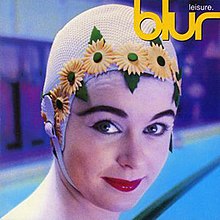 Purchased at Schoolkids Records in Raleigh, NC, 7/14/11
DISC-CLAIMER: I buy my music regularly from two shops- If I’m in Chapel Hill, which is most of the year, I go to CD Alley. But whenever I’m back home in Raleigh, I always go to Schoolkids, my favorite record store since freshman year of high school. I love the store’s look, and the location, next door to my work, is both a blessing and a curse. I just wanted to give a shout-out to Schoolkids excellent customer service- I’ve wanted this album for about a year and never really got around to buying it. I went to Schoolkids about 10 days ago and asked if they had it. Apparently, Leisure was never reissued since its 1990 release, and the original version was out of print. However, the clerk notified me that the store has a hookup to a used record warehouse in England, and as luck would have it, this massive warehouse had one copy of “Leisure” left. He ordered it for me, and it made the trip to Raleigh in four days. When I picked it up, he buffed the scratches out for me- best of all, he didn’t charge me a cent for ordering it, buffing it, or the shipping. It was $8 well spent for an original copy of one of the most important albums of the nineties. So next time you want to buy some music, make an effort to buy it at Schoolkids. They closed their Chapel Hill store a few years ago and I would be saddened if the Raleigh store met a similar fate. Anyway, on with the review!
British rock and roll had a second Invasion in the late Eighties, early Nineties, and had a transformation. After years of keyboard-driven New Wave bands, British bands were returning to guitar, bass, and drum- driven pop music while grunge started up in the United States. The Britpop movement brought such bands as Supergrass and Suede, but the two most famous bands of the period were probably Oasis and their lesser-known rivals, Blur. While Oasis preoccupied itself with bringing the glory of 60’s British rock back from the dead and becoming a modern version of the Beatles, Blur were pushing new frontiers in pop, combining 80’s shoegaze rock and Manchester “baggy” rock music with seventies baroque pop, especially in their later albums “Modern Life Is Rubbish” and “Parklife”. At a certain point, Blur became bigger than Oasis, where, during the 1995 media event dubbed “The Battle Of Britpop”, their single “Country House” outsold Oasis’ “Roll With It”, culminating in months of tabloid backstabbing of Oasis’s Liam and Noel Gallagher wishing AIDS on Blur vocalist Damon Albarn and bassist Alex James.
But before all that, Albarn, James, guitarist Graham Coxon, and drummer Dave Rowntree were simply “Seymour”, renamed “Blur” shortly after getting signed and right before releasing their debut album, “Leisure”, in 1990. Though significantly more bare-bones than any of their later records, “Leisure” was a stellar preview of what was to come out of Blur’s 10-year career, featuring what would become the band’s trademark sound- James’s sloppy-but-it-works melodic bass playing, Coxon’s reverb-heavy rhythm guitar work, Rowntree’s frantic, funky, in-the-pocket drumming style, and Albarn’s whimsical lyrics sung in a heavy Manchester accent (If Damon Albarn’s name sounds familiar to you, he is the creator and lead singer of animated band“The Gorillaz” and frontman of the supergroup “The Good, The Bad, And The Queen” with Clash bassist Paul Simonon and Afrobeat drummer Tony Allen).
“Leisure” begins with the washed-out, shoegaze-y “She’s So High”, which features Coxon’s guitar lines overlapping each other like an ocean of guitar fuzz, while James’s active bassline gives the otherwise slow song its momentum. Up next is the rapid one-two punch of “There’s No Other Way” and “Bang!”, which combine two of the best chord-based riffs this side of the Rolling Stones with the locomotive rhythm section of Rowntree and James rumbling underneath. In addition, both of these upbeat rockers showcase Albarn and Coxon’s trademark intertwining harmonies, a voice matching as perfect as Lennon and McCartney or R.E.M.’s Mike Mills and Michael Stipe.
The band kicks back with the funky, sexual “I Know”, complete with rollicking bass line, hi-hat heavy drumbeat, funky guitar chords, a mechanical harmonic riff, and an organ part played by Albarn. “Slow Down”, “Repetition” and “Bad Day” kick it up a notch, paying homage to the grungy sound of Manchester “baggy’” rock. Every song on the record is upbeat and high-energy, except for “She Is So High” and the gloomy, depressing “Birthday”, which is very similar in feel to some of Blur’s later, more well-known ballads, such as “No Distance Left To Run”.
The songs are catchy, and fairly easy to tell apart, but unfortunately, many of them sound like rewrites of each other and as a result are considerably formulaic, especially after listening to the fourth track. But the listener must remember that this was the band’s first record, released before they had managed to define a core sound, which only came to fruition in their 1994/5 heyday. 1991’s “Leisure”, however, does manage to sound as young and as fresh as it did 21 years ago.
Saturday, July 16, 2011
Elbow- Build A Rocket Boys!

Purchased at Schoolkids Records in Raleigh, NC, on 7/8/11
After the stadium-friendly rock of their fourth album “The Seldom Seen Kid”, Manchester alternative-rock band Elbow return with “Build A Rocket Boys!”, a collection of nostalgic songs lyrically centered around lead singer Guy Garvey’s adolescence and early twenties. The album views youth as a fleeting, precious thing with an importance that’s only recognized in hindsight, like a parent seeing their child off to college and finally understanding with great sadness that they’ll never get to see their child grow up again, despite all the hardships involved.
The album starts with the 8-minute long soaring rocker “The Birds”. Richard Jupp’s steady drumbeat and Pete Turner’s fuzzed bass quickly give way to a beautiful string part, arranged by Garvey himself. Above all of this, Garvey sings (in two separate octaves!) and muses whether birds who flew over the fields in which he used to lay with his love “keep those final kisses in their tiny racing hearts”. The song is reprised at the end of the record, but all the rock-n-roll bravado is stripped away, leaving a sparse, mournful tune, but this time sung by John Moseley, a 68-year old piano tuner from Manchester, giving the song a whole new level of sadness, seen through the eyes of one who has lived his whole life hoping that at least birds will remember he existed.
“The Birds” is followed by the most beautiful song of the album, “Lippy Kids”, in which Garvey observes teenagers loitering and smoking on corners (“the cigarette senate was everything then”), which prompts him to remember “stealing booze and hour-long hungry kisses” at that age while getting more and more distant to his family as he grew older, explaining that “no one knew me at home anymore”. Now older, Garvey looks at these kids that remind him of himself and wishes they understood how precious the time they have as youngsters is by singing “Do they know those days are golden? Build a rocket boys”. This soaring vocal line, combined with Mark Potter’s powerful guitar arpeggios and a glorious Garvey-arranged choral part is the emotional apex of the record.
There are two other standout ballads on the record. “The Night Will Always Win” has Garvey singing “I miss your stupid face” a line so inherently filled with hatred, but delivered in such a romantic and heartbroken way. And the quiet “Jesus is a Rochdale Girl” is the most autobiographical song on the record, based on a girl who took Garvey in for a while when he was a 20-year-old starving musician with nothing to his name. The song has a unexpectedly brilliant broken piano part performed by Craig Potter that sounds out of place at the outset, but becomes a surprisingly integral part of the song.
“Build A Rocket Boys!” still has the bluesy rock-and roll swagger that helped make “The Seldom-Seen Kid” such a success. The lead single, “Neat Little Rows”, about a man requesting to be buried under the cobblestones of his local church, has the distorted bass, driving guitars and piano that made “Grounds For Divorce” a hit, along with the instrumental hook of the chorus, which follows a masterful time change from ¾ into four. “High Ideals” is reminiscent of XTC’s “Green Man”, with elaborate string and vocal arrangements (Garvey, again!) following and complementing the band’s parts without sounding like embellishments- in other words, the strings are equally as loud and as omnipotent as the guitar riff in this song, giving it an epic quasi-orchestral quality to it. “High Ideals” also has some of the best of Garvey’s lyrics, which discuss family traditions and heirlooms (“there’s a bayonet in my family things- it was made in the USA to defend the king, and though the sinew that thrust and all the bones it splintered are dust it’s passed from hand to hand with the wedding rings”). And “Open Arms” sounds like a hidden track by Edward Sharpe and the Magnetic Zeros, featuring a rousing and catchy chorus sung by a crowd coupled with massive orchestral instrumentation.
Elbow’s Guy Garvey, Richard Jupp, Craig and Mark Potter, and Pete Turner have been playing together for 20 years, and it shows on this album. “Build A Rocket, Boys!” is a stellar record, showing the band at its most intimate and at its most ambitious in songwriting and album production. Elbow has only recently gotten the mainstream recognition it deserves, and if this record is any indication, their next effort, whenever that may be, promises to be truly spectacular.
18/20
Saturday, July 9, 2011
OK GO- Of the Blue Colour of the Sky

Purchased at Borders in Raleigh, NC, on 6/8/10
DISC-CLAIMER: I don’t make enough money to buy new records on a daily basis to review for Sittin’ On My Sofa, so I will often go back to a record I’ve had for a while and review it. This is unique, in that most music reviews only put up albums that just came out, and as a result, are only given one or two listens before press time. Revisiting albums will allow me to give them reviews after having listened to them for months or even years. Anyhow, enjoy!
Chicago indie-rockers OK GO are back with their third album, “Of The Blue Colour Of The Sky”. The band, perhaps best known for the self-made music video for their hit single “Here It Goes Again”, which consisted of the four band members performing a choreographed dance on treadmills, took a large risk with this album in that it doesn’t sound like anything they’ve ever done. The band’s first two albums, supported by singles like “Get Over It”, “Here It Goes Again”, and “1000000 Ways”, had an energetic, danceable pop-rock feel. On OTBCOTS, the quartet is unabashedly funky, experimental, and electronic, both at their most mellow and most energetic. OTBCOTS also makes OK GO and independent band- shortly after releasing the record, the band separated from Interscope Records and re-released the album on their own label, Paracadute. The band relied on their success on YouTube to promote their album, creating low-budget, often single-shot music videos for each track of the album using unorthodox subjects; a team of show dogs performing to “White Knuckles”, a 24-hour stop-motion video of the band performing “End Love”, a cartoon animated on old toast for “Last Leaf”, and the most ambitious music video of the band’s career- a giant Rube Goldberg machine, built by NASA to work in time to the song “This Too Shall Pass” (the band made an alternate video featuring the University of Notre Dame Marching Band, with some of the trumpet players disguised as grass).
OTBCOTS kicks off with “WTF”, a synthesizer-heavy upbeat song in 5, with singer Damian Kulash’s filtered falsetto vocals and Tim Nordwind’s fuzzed-out bass giving the song a double-dose of electronic funk. It’s followed immediately by “This Too Shall Pass”, which, fueled by Dan Konopka’s massive drumming, is the band at its most orchestral, complete with children’s choir, horns, and woodwinds, creating one of the year’s best indie-rock anthems. “White Knuckles” is a little nod to the eighties with a catchy keyboard riff, heavy dance beat, and a fuzzed out guitar solo. And “Back From Kathmandu” is a gem, with Nordwind channeling ex-Beatle Paul McCartney’s melodic bass playing style while Konopka hammers away at his toms and cowbell in true rock-star fashion, despite the fact that “Back From Kathmandu” is a ballad.
Much of the album is comprised of love songs, mostly dealing with love lost or unreciprocated love, and Kulash is able to do something that not many performers can do with the songs- he can sing about anguish and make the listener feel his pain. His screams at the end of the regretful “Skyscrapers” could strip paint off walls, then transforms into a falsetto RnB’ vocal run. OTBCOTS cements Kulash as an excellent rock singer, belting in the polyrhythmic ode to unrequited love, “Needing/ Getting” (Sample lyric; “I still need you, but what good’s that gonna do? Needing is one thing, and getting’s another”), singing in a funky falsetto in “Skyscrapers” and “I Want You So Bad I Can’t Breathe”, and singing softly and tenderly in the beautiful ballad “Last Leaf”, the most stripped-down song on the record, with nothing other than Kulash’s voice and acoustic guitar in the mix, placing all the attention on the earnest lyrics, in which Kulash tells his lover “If you should be the last autumn leaf hanging from the tree- I’ll still be here, waiting on the breeze, to bring you down to me. And if it takes forever, forever it’ll be.”
The other band members contribute just as much as Kulash on this record. Konopka’s beats combine pop sensibility with John Bonham-like power, Nordwind’s bass playing is slinkier and funkier than most rock players of his generation, and newcomer Andy Ross fills in the gaps with his meaty guitar and keyboard parts.
In addition, OTBCOTS has interesting conceptual art-graphs in the insert, which compares the album’s lyrics to some excerpts from the book “The Influence of the Blue Ray of the Sunlight and of the Blue Colour of the Sky”, by General A.J. Pleasonton. Never before has word count looked so good.
With “Of The Blue Colour Of The Sky”, OK GO places itself as one of the forerunners of multimedia as part of musical expression, from their album’s concept to their viral presence, and especially with their fantastic live show (DISC-CLAIMER: I saw OK GO the summer I bought this record at two separate occasions- first in May at the Lincoln Theater in Raleigh, NC, and at the Bonnaroo Music Festival in Manchester, TN. They are absolutely incredible live, and make a great show out of it, pulling out all sorts of visuals including laser-shooting-guitars, blacklights, confetti cannons, video projections, and a lot of audience participation. At the Lincoln Theatre show, Kulash came out into the audience with a mic stand and his acoustic to serenade the crowd in one of the most intimate live moments I’ve ever witnessed. And at Bonnaroo, he jumped into the crowd with his guitar and taught an audience member to play the guitar riff of “Here It Goes Again”. They also have a great ear for not-as-well-known bands; the fantastic trio Earl Greyhound opened for them at the Lincoln). Truly, a great band, and album, for the times.
Sunday, July 3, 2011
"Weird Al" Yankovic- Alpocalypse

Purchased at Schoolkids Records in Raleigh, NC, on 7/1/11
“The “Eat It” and “White and Nerdy” guy” is back! Five years after his 2006 bestseller “Straight Outta Lynwood”, “Weird Al” Yankovic, parodist extraordinaire and polka enthusiast, returns with “Alpocalypse”, a collection of songs that pokes fun at the most popular songs of the second half of the 00’s (“aughts?”).
There’s “TMZ”, a parody of the Taylor Swift song “You Belong with Me”, telling an imaginary celebrity about the horrors of the celeb gossip website, giving Yankovic a great chance to attack the narcissistic nature of celebrity news and culture, sarcastically delivering the line “You’re sorta famous, a minor celebrity, and so it only makes sense the world would be obsessed with every single thing you do.” “Another Tattoo” is a tale of ink and regret, set to B.O.B. and Bruno Mars’ smash single “Nothin’ On You”. And there’s “Whatever You Like”, a parody of the song of the same name, focusing on living in economical hardship.
And of course, there’s the biting lead single, “Perform This Way”, a parody of the hypocritical Lady Gaga song “Born This Way”, referencing everything from the pop star’s 2011 Grammy performance (“My mother told me, when I was hatched, act like a superstar”) to her meat dress (“I bet you haven’t seen a skirt-steak worn this way”), to her “shocking” stage costumes (“I’ll wear a porcupine on my head, on a W-H-I-M”), and to her rabid fanbase (“my little monsters pray lots, cause I perform this way”), all from the perspective of Gaga herself, saying that “I’m not crazy, I perform this way.”
In addition to the parodies, “Weird Al” copies the style of a few legendary artists on this album that have been around before any of the other parodies’ inspiration song creators began performing. The best of these is probably “Craigslist”, a song about the infamous classified website, performed in the style of the Doors. “Weird Al” does a spot-on impression of late Doors vocalist Jim Morrison, and in terms of vocal performance, it’s one of the best songs he’s ever recorded. Yankovic’s drummer, John "Bermuda" Schwartz, replicates Doors drummer John Densmore’s jazzy style to perfection, and Jim "Kimo" West’s guitar at the start of the song has the bluesy, fuzzy “Doors tone” created by that band’s guitar player, Robby Krieger. To top it off, Doors keyboardist Ray Manzarek plays his trademark keys on the track, giving the parody a genuine “Doors Sound”, similar to the sixties band’s hits “Light My Fire” and “The End”.
There’s also “Ringtone”, performed in the style of Queen, complete with cluster-chord harmonies, erratic song structure, distorted guitar leads, drum fills a la Roger Taylor, and quasi-classical piano. “CNR” is a tribute to the White Stripes, full of chunky guitar riffs and bluesy howling vocals, brilliantly executed by Yankovic himself. And “If That Isn’t Love” sounds like a forgotten Hanson track.
In addition, “Alpocalypse” features a couple of wonderful original songs of Yankovic’s. “Stop Forwarding That Crap To Me”, the closing track of the album, is a “beautiful” power ballad about the perils of the internet in a similar vein to “Lynwood’s” “Don’t Download This Song”, and the upbeat “Skipper Dan” is arguably the happiest song ever written about broken dreams, as the song’s title character laments his job as a jungle cruise tour guide, despite having studied Uta Hagen and Shakespeare at Julliard.
No “Weird Al” album would be complete without one of his signature polka medleys. “Polka Face” is one of the best he’s ever done, including various Top 40 hits originally performed by Katy Perry, Pink, Justin Beiber, Britney Spears, Ladies Gaga and Antebellum, and even Jamie Foxx, among others.
“Alpocalypse” is a hilarious new record from “Weird Al” Yankovic that is as satirically funny as it is biting to an ever-changing popular music industry. It also has a fantastic album cover.
The Decemberists- The King Is Dead
Purchased at Schoolkids Records in Raleigh, NC on 6/30/11.
After the hard-rock style of their 2009 album “The Hazards of Love” (See review below), Portland band The Decemberists return to what they do best for their sixth album- folk music. “The King Is Dead” has the familiar stomping folk anthems and dark ballads that put the band on the map in the first place without sounding like a back-to-basics record. It lacks the British-steam punk-storytelling vibe of their first records, taking instead a more subdued, classic Americana feel, with lots of Neil Young-y harmonica and bluegrass harmonies, tinged with violin and tasteful pedal steel, masterfully played by multi-instrumentalist Chris Funk.
Despite being a folk album, “The King Is Dead” has its rocking moments, particularly on the lead single “Down by the Water” and on the dark “Calamity Song”, which both have echoes of “Murmur”-era R.E.M. songs like “The One I Love” and “Catapult” respectively. Decemberists front man Colin Meloy has stated in many interviews that R.E.M. was a major influence in the album’s creation. In addition, R.E.M. guitarist Peter Buck plays on both “Down by the Water” and “Calamity Song,” lending the record his trademark jangly guitar chord arpeggios that became synonymous with R.E.M.’s early sound. Buck also plays mandolin on the record’s stomping opener, “Don’t Cary It All”, a song of working together with neighbors on a farm during the harvest.
Teamwork is all fine and good, but death and destruction are the Decemberists’ specialty. The lyrics of “Calamity Song” discuss the “at least it isn’t me” attitude many have towards natural disasters, such as the line “California succumbed to the fault line, we heaved relief as scores of innocents died”. The song also deals with (presumably airline) post 9-11 travel anxiety; “On the road, it’s advised that you follow your own bag in the year of the chewable Ambien tab”. “Rox in the Box” is classic Decemberists fare, a sea-shanty about wasting away working down a mine (“You won’t make a dime on his Gray Mountain Mine- of dirt you’re made and to dirt you will return”), with one of the Decemberists’ best accordion solos, expertly played by keyboardist Jenny Conlee, accompanied by Chris Funk on bouzouki. The two lead singles, “Down By The Water” and “This Is Why We Fight” are heavy-handed folk-rock gems.
“The King Is Dead” features some of the finest Decemberists ballads ever written. “June Hymn” is a mournful ballad from the perspective of a man on his deathbed remembering the summer mornings on “Springville Hill” with his love; “And once upon it, the yellow bonnets garland all the lawn- and you were waking, and day was breaking, a panoply of song”. Glorious backing vocals by guest vocalists Gillian Welch and David Rawlings make the song’s chorus incredibly poignant. The contemplative “January Hymn” tells of a man and his children surviving yet another winter. The album’s final track, “Dear Avery”, is a plea of a parent begging his headstrong teenage son Avery to come home, being physically unable to move him out of harm’s way like when he was a boy; “But you were my Avery, and when you needed saving, I could just grab you by the nape of your neck.” Chris Funk’s slide guitar never sounded better.
“The King Is Dead” is a solid Americana album from folk-rock godfathers The Decemberists doing what they do best- spinning yarns of love, work, and death, wrapped in lush instrumentation and thoughtful lyrics, in a manner that is 100% their own.
Friday, July 1, 2011
My Morning Jacket- Circuital

Purchased at Schoolkids Records in Raleigh, NC, on 6/30/11
DISC-CLAIMER: I won't usually write in the first person, but I decided that it was appropriate for this particular album. I started listening to My Morning Jacket in December 2009, when a friend of my dad's with really good taste in music burned me a "The Very Best of My Morning Jacket, In My Opinion" mixed CD, which featured some of their more famous songs, such as "Evil Urges", "Touch Me, I'm Going To Scream,Pt. 1&2" and "Wordless Chorus". I really liked the band, but never got around to buying one of its albums. I bought a ticket for the Cary stop on their 2010 tour, but unfortunately, I forgot there were exams the next day, and I couldn't see them after all.
Anyway, I read the June "Summer Double Issue" of Rolling Stone Magazine, which had an in-depth article on MMJ and the new album. The article, along with hearing the first thirty seconds of the title track online convinced me to go out and buy this album. Formal writing starts...now.
On the follow-up to their hugely successful 2008 album "Evil Urges", Louisville psych-rockers My Morning Jacket manage to create an excellent, coherent record that is different than anything they've done without being anything but themselves. Instead of the lush psychedelic soundscapes and hard-rock instrumental breaks on past songs like "Evil Urges" and "Touch Me I'm Going To Scream Part 2", "Circuital"'s strength lies in its emotional movement and its childlike wonder, especially on the tracks "Wonderful (The Way I Feel)", a Neil Young tinged ballad (and perhaps one of the best ballads of the last five years, with lyrics such as "I won't grow older, at least not in my mind"), and "Outta My System", a humorous song in which the narrator regrets taking drugs and stealing cars. Bandleader Jim James supposedly wrote those two songs for Dr. Teeth and the Electric Mayhem, the band from the Muppets, for a scrapped project that consisted of MMJ playing as a backing band for an animatronic Dr. Teeth and the Electric Mayhem live show, adding to the playful nature of the album.
The album opens with a gong hit, which begins the dark, brooding "Victory Dance" in which Jim James wonders if he should "wet the ground with the sweat of my brow and believe in my good work?" and hoping to watch "The victory dance when the work is done." The album's first single, "Holding on to Black Metal" is catchy, features a female mini-choir on backing vocals, and is funky. But the best track is probably the epic, seven- minute long title track, which starts off with a quiet, palm-muted electric guitar riff played by Carl Broemel, which, coupled with Jim James' quiet singing, gives the song, at first listen, a haunting feel. This changes completely when James effortlessly slides into his falsetto, a harbinger to the "Solsbury Hill"-esque power chord and jangly acoustic guitar transition into the second half of the song, which is driven by the dynamite rhythm section of Patrick Hallahan's powerful drumming, Tom Blankenship's rolling bass line, and Bo Koster's rapidly arpeggiated piano chords.
Though the last four tracks of the album are not quite as memorable as the first six, "Circuital" is a solid record from MMJ, with a stronger focus on songwriting rather than their trademark jams that place them with The Flaming Lips as this generations' leading psychedelic rock band. It is also a fantastic record in its own right.
Subscribe to:
Posts (Atom)